
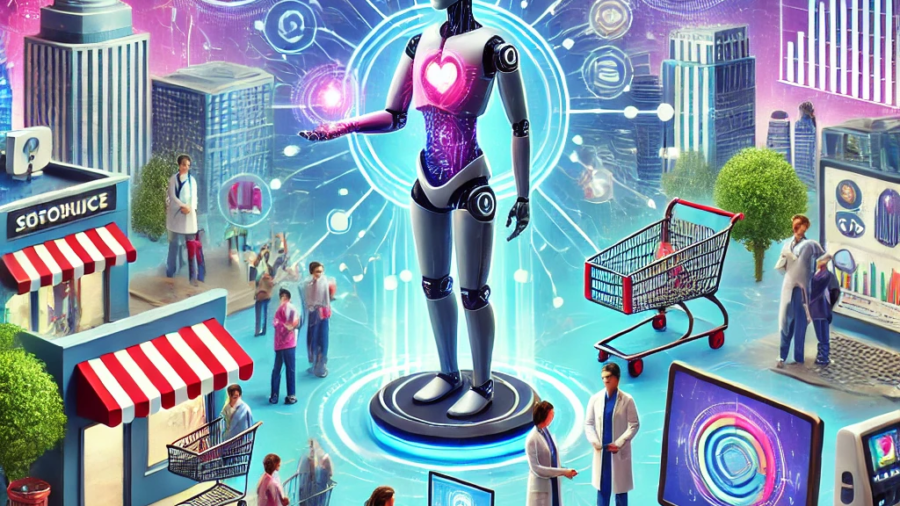
Artificial Intelligence (AI) is no longer just a futuristic concept—it is actively reshaping industries worldwide. From healthcare to finance, retail, and marketing, AI-driven technologies are revolutionizing operations, improving efficiency, and enabling data-driven decision-making. As machine learning and automation continue to evolve, businesses must adapt to remain competitive in an AI-driven world.
1. AI in Healthcare: Enhancing Patient Care and Diagnosis
The healthcare industry is one of the biggest beneficiaries of AI advancements. AI-powered tools are improving patient care in several ways:
Early Disease Detection: AI algorithms analyze medical images to detect diseases like cancer at early stages.
Personalized Treatment Plans: Machine learning enables customized treatment recommendations based on a patient’s medical history.
Automated Administrative Tasks: AI assists in streamlining administrative processes, reducing paperwork, and enhancing efficiency.
2. AI in Finance: Revolutionizing Risk Assessment and Fraud Detection
The financial sector relies on AI to enhance security, efficiency, and customer experiences:
Fraud Prevention: AI detects suspicious activities and minimizes fraudulent transactions in real time.
Algorithmic Trading: AI-driven trading bots analyze market trends and execute trades with precision.
Customer Support: AI-powered chatbots and virtual assistants handle customer inquiries, improving response times.
3. AI in Retail: Enhancing Customer Experience and Supply Chain Management
Retail businesses are leveraging AI to offer personalized shopping experiences and optimize logistics:
Chatbots & Virtual Assistants: AI-driven customer service tools provide instant assistance and recommendations.
Inventory Management: AI predicts demand and automates restocking, reducing waste and stock shortages.
Facial Recognition & Checkout-Free Stores: AI-powered stores like Amazon Go eliminate checkout lines and enhance convenience.
4. AI in Marketing: Automating Campaigns and Personalization
Marketing has evolved significantly with AI, enabling brands to connect with customers more effectively:
Predictive Analytics: AI analyzes customer behavior to predict purchasing patterns and preferences.
Content Generation: AI-powered tools create high-quality content, social media posts, and even ad copy.
Automated Ad Targeting: AI optimizes digital ad placements to reach the right audience at the right time.
5. Ethical Concerns and Challenges of AI Development
While AI offers numerous benefits, it also raises ethical questions and concerns:
Job Displacement: Automation threatens traditional jobs, requiring workforce adaptation.
Bias in AI Algorithms: AI systems can inherit biases from data, leading to unfair decision-making.
Data Privacy & Security: AI-powered systems must ensure user data protection and ethical usage.
Conclusion
AI is transforming industries at an unprecedented pace, offering innovation, efficiency, and new opportunities. However, it also comes with challenges that must be addressed responsibly. As businesses continue to integrate AI into their operations, staying informed about advancements and ethical considerations will be crucial. The rise of AI is not just a technological shift—it’s a revolution shaping the future of every industry.